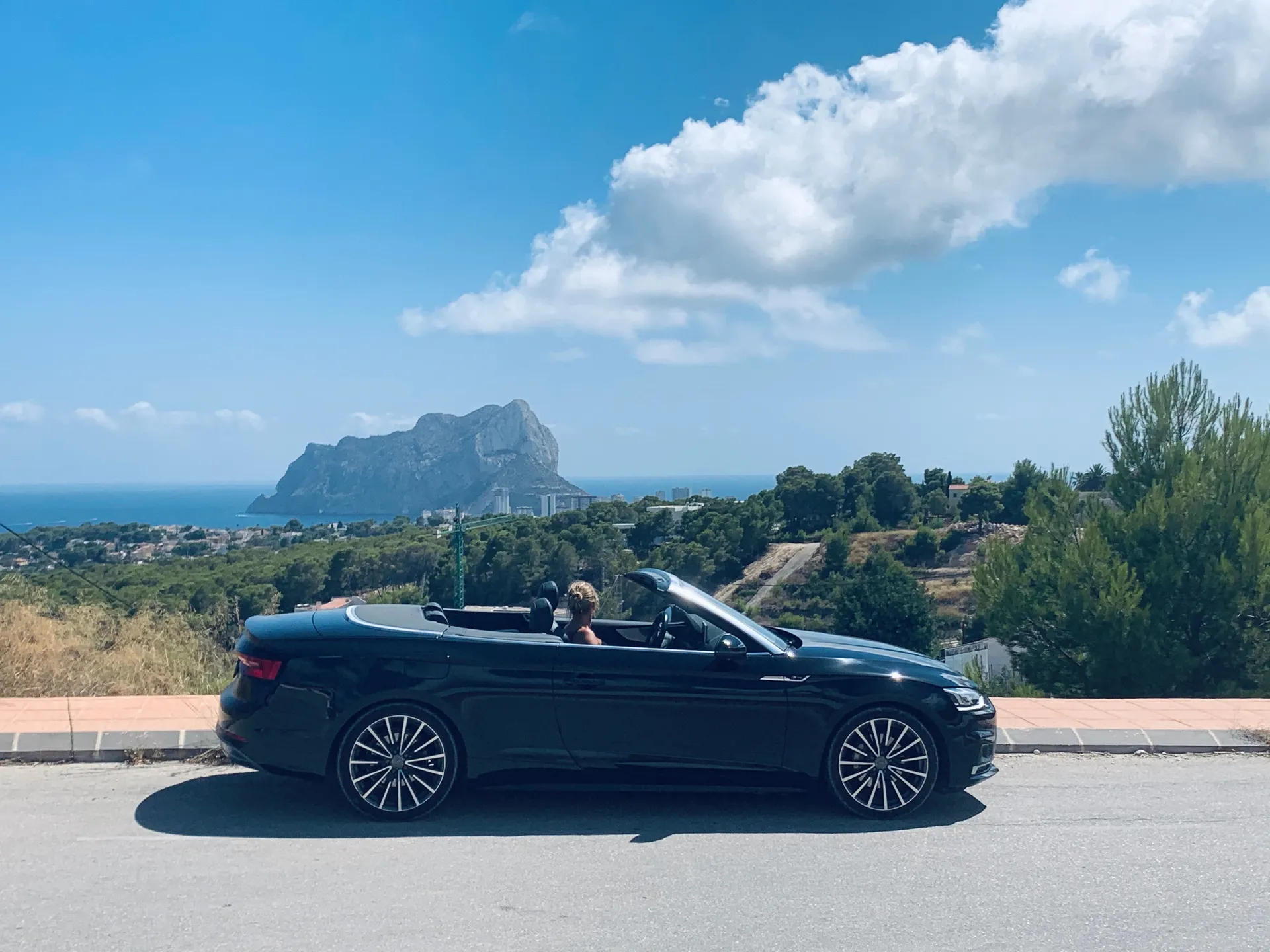
IMPORTING YOUR CAR TO SPAIN: an overview
In this article
When you move to Spain and become a resident, you are required to register your vehicle in Spain. You may either purchase a vehicle locally or import your existing car from another EU Member State.
Importing a vehicle is not impossible, but it requires preparation and an understanding of Spanish administrative procedures. Below you will find when registration is mandatory, which documents are required, how the process works, the associated costs, and how the registration tax is calculated.
WHEN DO YOU HAVE TO REGISTER YOUR CAR IN SPAIN?
If you are a tax resident in Spain (more than 183 days per calendar year), you must register your foreign-plated vehicle in Spain. In practice, you are expected to start this process within about 30 days after registering as a resident.
Non-residents may drive with a foreign (EU) license plate as long as they stay in Spain fewer than 183 days per calendar year and the vehicle is properly registered and insured in the country of origin. The car must not be effectively permanently based in Spain.
As a resident, driving long-term with a foreign license plate can lead to fines and tax reassessments.
WHAT DOCUMENTS DO YOU NEED?
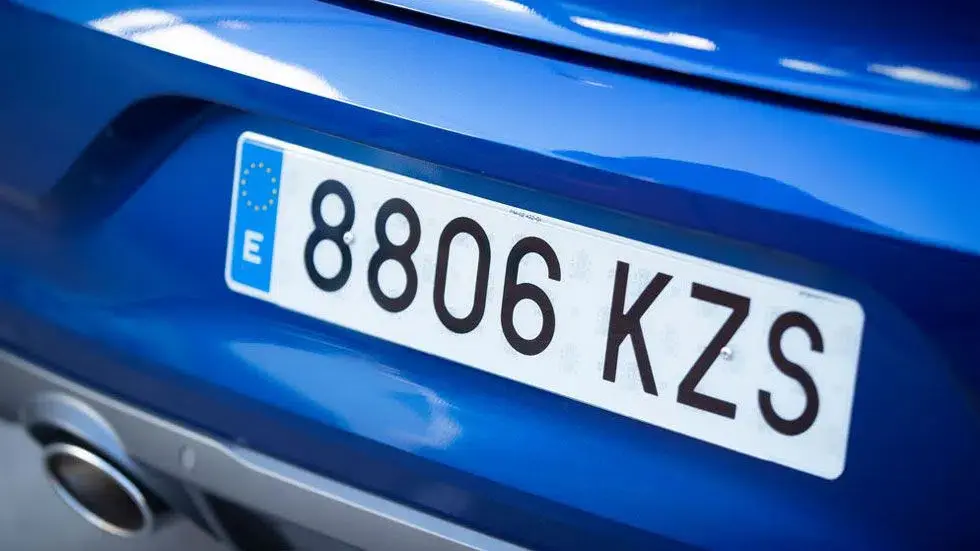
For importing a car, the following documents are typically required:
Original registration certificate (all parts)
Purchase invoice or proof of ownership
COC certificate (Certificate of Conformity – official manufacturer document confirming the vehicle complies with EU type approval)
European certificate of conformity
Valid ID card or passport
NIE number
Proof of address in Spain (Certificado de Empadronamiento)
Spanish car insurance
ITV inspection (Spanish technical inspection)
Where required, these documents must be translated into Spanish by a sworn translator. If the COC certificate is missing, a separate technical homologation process is required. This leads to additional costs and delays.
TAX EXEMPTION AS PART OF HOUSEHOLD RELOCATION
If you move permanently to Spain, your car may, under certain conditions, be imported tax-free as part of your household relocation (menaje de hogar).
Main conditions:
You have lived outside Spain for at least 12 months
You have owned the vehicle for at least 6 months before emigrating
The car is part of your personal belongings
You apply within 60 days after becoming resident
No sale within 12 months
In practice, this exemption usually applies to one car per person or household.
THE PROCESS STEP BY STEP 1. ITV inspection (Inspección Técnica de Vehículos) The car must first undergo a technical inspection at an approved ITV station. You need to book an appointment. The vehicle is checked to ensure it meets Spanish technical standards. If necessary, modifications may be required. Once approved, you receive a Spanish technical data sheet. 2. Registration tax declaration (Impuesto de Matriculación – Modelo 576) In Spain, the registration tax declaration (Impuesto de Matriculación, Modelo 576 – presentación) is generally submitted online via the Agencia Tributaria website. This can be done with a digital certificate, Cl@ve, or through an authorised representative (for example, a gestor). After submission and payment, you receive the payment confirmation you need for the next step with the DGT. 3. Payment of municipal road tax (Impuesto de Circulación) This tax is paid to the municipality where you are registered. The amount varies by municipality and vehicle type. This can be done online via the SUMA website or in person at the SUMA municipal office, and sometimes via a collaborating bank. 4. Registration with the DGT After paying the taxes, you submit the dossier to the Jefatura Provincial de Tráfico (DGT). Once approved, you receive a Spanish registration and license plate number. Submission is done by appointment (cita previa) at a provincial DGT office. You must bring all documents to the office (proof of payment for registration tax and IVTM, COC or technical data sheet, ITV inspection documents if applicable, ID, application form, etc.) and pay the DGT fee on-site (or online in advance). 5. Getting the new license plates made Once the DGT has approved your registration, you receive your new Spanish license plate number. With that number, you go to an authorised license plate manufacturer (for example, a garage, car parts shop, or specialised store with the official DGT sign “Fabricante de placas autorizado”). They produce the plates on the spot. You usually need to bring:
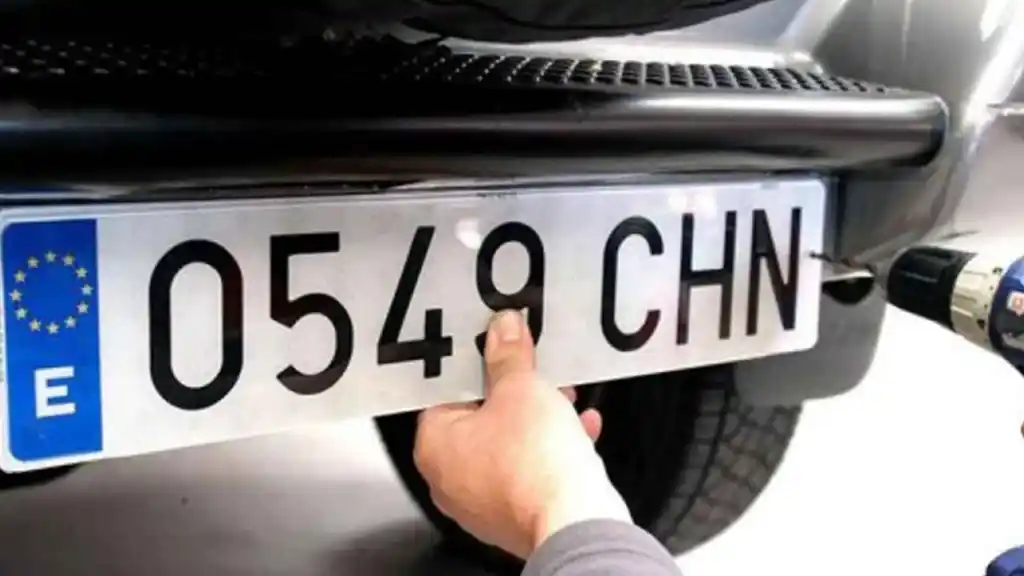
your permiso de circulación (or the provisional DGT document)
your ID
The plates are produced immediately (often within minutes) and typically cost around €20 to €40 per set. In some cases, plates must be ordered, which takes longer. After receiving them, you (or a garage) must mount them on the car. From that moment on, you may officially drive with your Spanish plates.
THE REGISTRATION TAX EXPLAINED
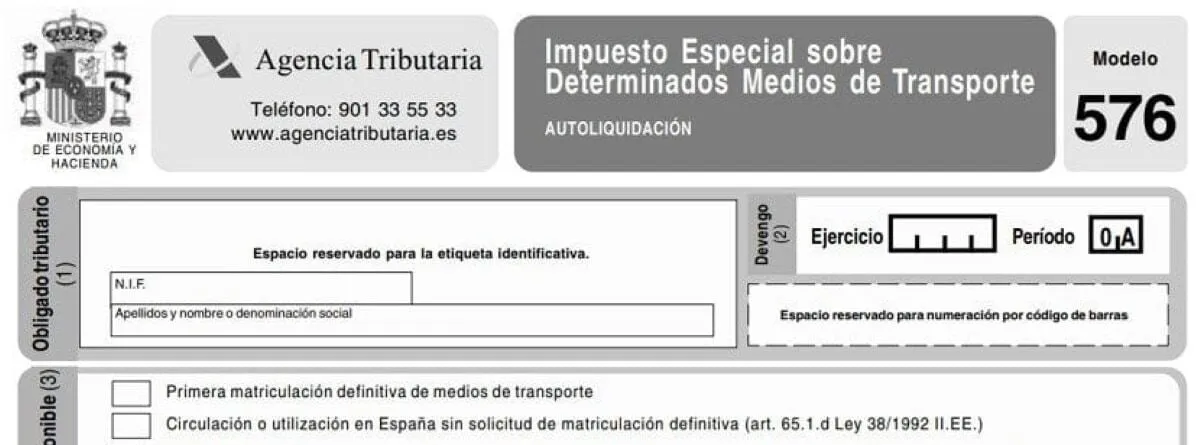
The registration tax (Impuesto de Matriculación) is calculated based on two factors:
the car’s CO₂ emissions
the car’s fiscal value
CO₂ rates
0% up to 120 g/km
4.75% from 121–159 g/km
9.75% from 160–199 g/km
14.75% from 200 g/km or higher
The percentage is not calculated on the purchase price you paid, but on the official fiscal reference value used by the Spanish tax authority.
Fiscal value of the car
The age of the vehicle does not affect the tax percentage, but it does affect the value on which the percentage is applied. The Spanish tax authority publishes official value tables each year. Based on the year of manufacture, a depreciation percentage is applied.
Indicative depreciation:
Up to 1 year: 100%
1–2 years: 84%
2–3 years: 67%
3–4 years: 56%
4–5 years: 47%
5–6 years: 39%
6–7 years: 34%
7–8 years: 28%
8–9 years: 24%
9–10 years: 19%
10–11 years: 17%
11–12 years: 13%
Older than 12 years: 10%
The older the car, the lower the fiscal value and therefore the lower the registration tax.
CALCULATION EXAMPLE
Assuming:
The car is 6 years old
Official reference value: €30,000
Depreciation (6–7 years): 34%Fiscal value = €30,000 × 34% = €10,200
CO₂ emissions: 150 g/kmApplicable rate: 4.75%
Registration tax = 4.75% of €10,200 = €484.50
As you can see, the final tax can be significantly lower than many people expect.
COST OVERVIEW
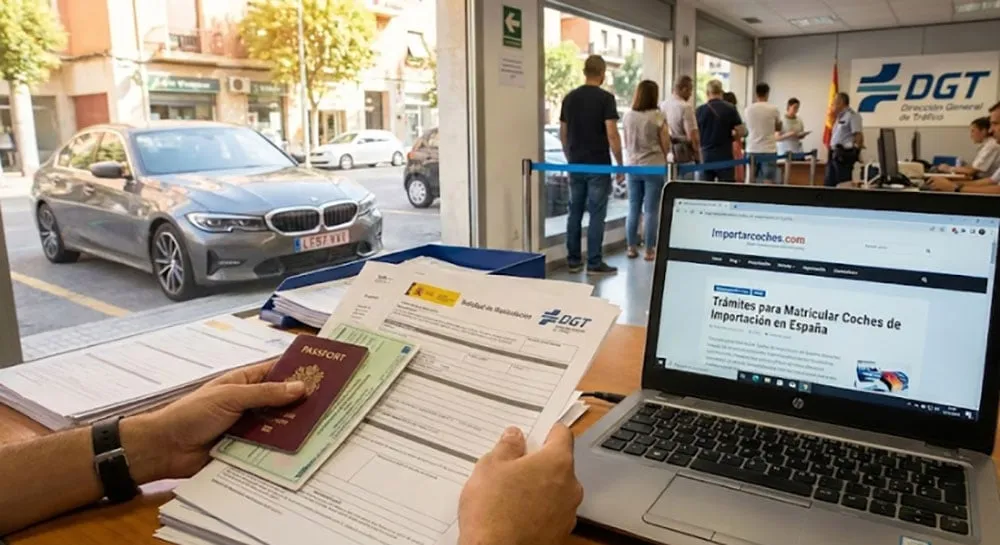
In addition to the registration tax, you should take into account:
ITV import inspection: €100 – €200
DGT registration fee: approx. €100
Municipal road tax: depends on the municipality
License plates: €20 – €40
Optional gestor: €300 – €600
On average, the total cost is between €800 and €2,000, depending on the vehicle, age and emissions.
HOW LONG DOES IT TAKE?
With complete documentation, the process usually takes 4 to 8 weeks. Missing documents or homologation procedures can extend this timeline.
DO IT YOURSELF OR OUTSOURCE?
The process is administrative but manageable. If you speak enough Spanish and have time to book appointments and complete forms correctly, you can do it yourself.
If you want certainty and fewer administrative headaches, a specialised gestor can handle the process for you. Some companies that can help include: Auto Import Costa Blanca or El Puerto Gestoria (Pérez Gimeno) in Altea (also for boats).
CONCLUSION
When you move to Spain and become resident, it is mandatory to register your vehicle there. This can be done by buying a car in Spain or importing your vehicle from an EU country, provided you meet certain conditions and costs. The administrative and tax procedures, including obtaining Spanish plates and paying the registration tax, can be complex—especially if you are not yet fluent in Spanish. It may therefore be advisable to use a specialised company (a “gestoría”) for assistance with registration and required documentation.
SOURCESDirección General de Tráfico (DGT): https://www.dgt.esVehicle registration: https://www.dgt.es/nuestros-servicios/tu-vehiculo/matriculacion-de-vehiculos/Agencia Tributaria – registration tax: https://sede.agenciatributaria.gob.esImpuesto Especial sobre Determinados Medios de Transporte: https://sede.agenciatributaria.gob.es/Sede/impuestos-tasas/impuestos-especiales/impuesto-especial-determinados-medios-transporte.htmlBoletín Oficial del Estado – official value tables: https://www.boe.esEuropean Commission – registering a vehicle in another EU country: https://europa.eu/youreurope/citizens/vehicles/registration/registration-abroad/

Related Posts
 Emigration & Integration
Starting a B&B or campsite on the Costa Blanca, a dream or nightmare?
Do you dream of opening a hotel, a winery, an olive or oil mill or even a golf course on fallow land? You are certainly not the only one, as many people are considering realising their dream and giving their life a new direction.As a property finder, we therefore regularly receive questions about the possibilities and the laws and regulations involved. Therefore, we have tried to provide a concise overview of the complex application procedures you can expect if you decide to realise your dream p
 Emigration & Integration
How do I get a Spanish driving licence?
When you become a Spanish resident, you face a challenging administrative to-do list. One of the items on this list is the conversion of your foreign driving licence to the Spanish driving licence. Do you live in Spain and is your EU driving licence (almost) expired? Then you can no longer renew your driving licence. You can then only exchange your EU driving licence for a Spanish one. In this blog, we give an overview of the regulations on this and mention some other interesting facts about the
 Emigration & Integration
Healthcare in Spain: Seguridad Social and/or Private Insurance
Spain is known for its good healthcare system, which is both accessible and affordable for residents and foreigners alike. Whether you are a resident of Spain or staying in the country temporarily, it is important to understand how the Spanish healthcare system works and what choices you have in terms of health insurance. In this blog, we will take a closer look at the Seguridad Social, the public healthcare system, and the option of private insurance.