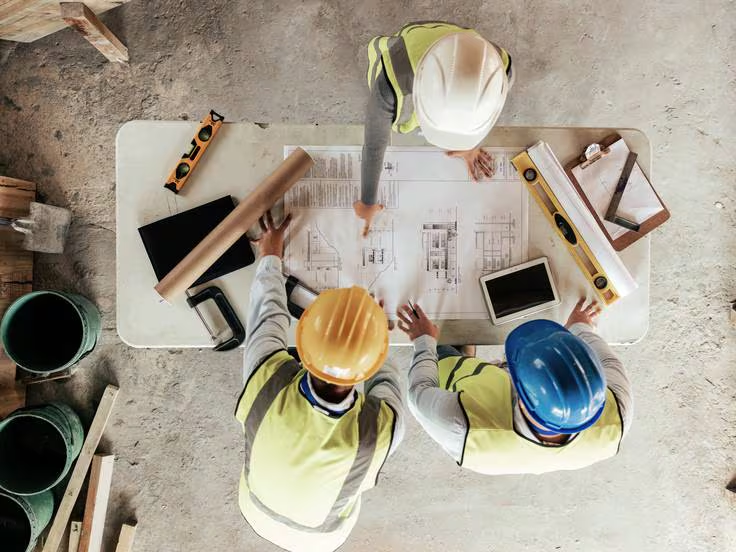
When does a reduced VAT rate (10%) apply to renovation costs
In this article
In the context of home renovation and repair in Spain, the applicable VAT rate varies. While the general rate is 21%, a reduced rate of 10% can be applied under certain conditions. In this blog, we provide you with insights on the conditions you need to meet to save on VAT.
As a general rule, the normal rate of 21% applies
The performance of renovation and repair works on buildings mainly intended for housing may, under certain conditions, be taxed at the reduced VAT rate of 10%.
The following conditions must be met for this to apply:
The works must be carried out on a building that is mainly intended for residential use (at least 50% of the built-up area must have a residential function).
The dwelling must have been first occupied at least two years before the start of the works.
The recipient of the works must be a natural person and the works must relate to a dwelling intended for residential use. The dwelling must not be purely professional or commercial in nature. If the dwelling is used exclusively for an economic activity (e.g. as an office or commercial space), the reduced rate does not apply. In the case of mixed use or rental, the application of the reduced rate may depend on the specific situation.
If the contractor supplies materials, their value may not exceed 40% of the taxable base of the total invoice. If this limit is exceeded, the general rate of 21% applies.
The reduced rate of 10% only applies in the relationship between the contractor and the end user of the dwelling. Subcontractors who carry out work on behalf of a main contractor generally invoice their services at the standard VAT rate of 21%.
Example:
Installation of flooring in a home for 10,000 euros, of which 3,000 euros correspond to materials supplied by the company or trader executing the project, will be fully taxed at the reduced rate.
However, a project totaling 10,000 euros, of which the supplied materials amount to 5,000 euros, will be taxed at the general rate.
Construction or repair works
The following works are taxed at the reduced rate (10%):
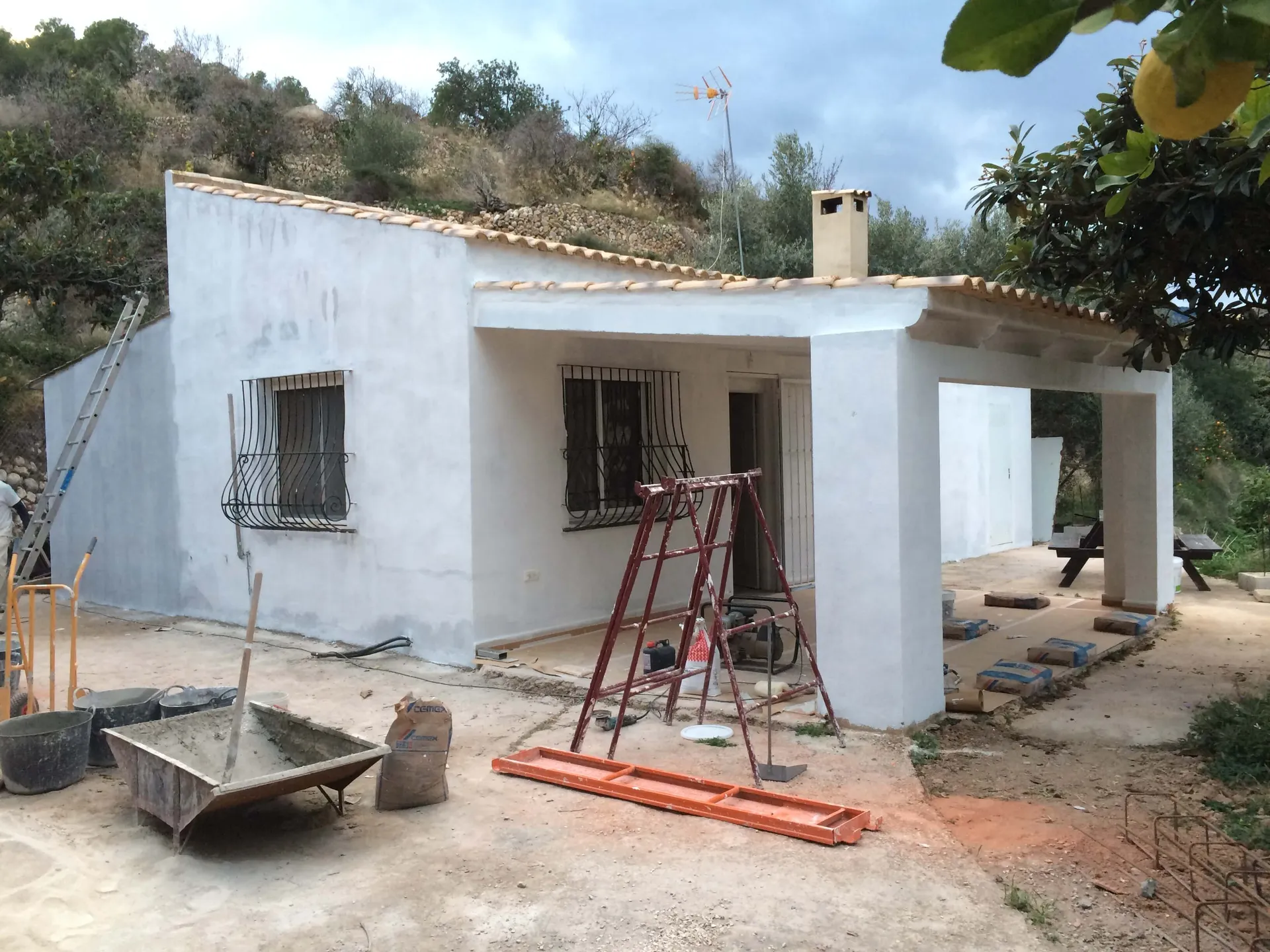
The execution of construction or renovation works on buildings primarily intended for housing, including garages and outbuildings, as a result of contracts directly formalized between the developer and the contractor. (The reduced rate does not apply to subcontractors). Buildings where at least 50% of the built area is intended for such use are considered primarily intended for housing.
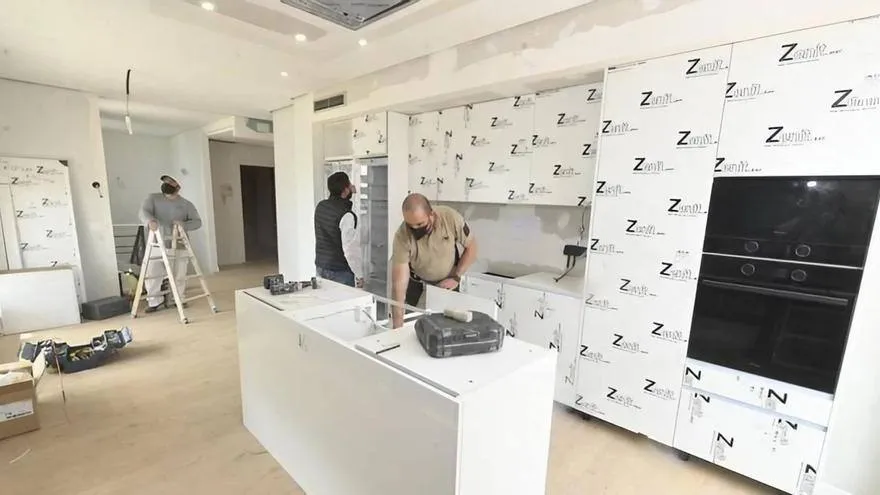
Sales with installation of kitchen and bathroom furniture and built-in wardrobes for homes, as a result of contracts directly formalized between the developer of the construction or renovation and the contractor.
Execution of works directly formalized with communities of owners for the construction of garages in buildings primarily intended for housing, provided they are carried out on common ground, and the number of spaces allocated to each owner does not exceed two.
The supply without installation of doors, windows, wardrobes, kitchen furniture, etc., for the execution of works on buildings, will in any case be taxed at the general rate of 21%, as it is not considered the execution of works.
The extension of a home is considered construction, and 10% is applied when the living area is increased. Interior renovation works on a home are not considered construction works.
Rehabilitation works
To determine if the executed works are rehabilitation works and taxed at the reduced rate of 10%, two conditions must be met:
More than 50% of the total costs of the rehabilitation project correspond to works to consolidate or treat structural elements, facades, or roofs, or works similar to or related to rehabilitation works.For this, it is necessary to have sufficient evidence to substantiate the true nature of the planned works, such as specifically issued professional statements or project visas and, if applicable, project certification by a professional association.
If the first condition is met, the total amount of the total works must exceed 25% of the purchase price of the building (if carried out in the two years prior to the start of the rehabilitation works) or the market value of the building before rehabilitation, in both cases discounting the value of the land.
Works comparable to rehabilitation
Structural adjustments that provide the building with constructive safety, ensuring stability and mechanical resistance.
Those of reinforcement or adjustment of the foundation, as well as those affecting or consisting of the treatment of pillars or slabs.
Those for the extension of the built area, above and below ground.
The reconstruction of facades and interior patios.
Those for the installation of lifting elements, including those to overcome architectural barriers for use by the disabled.
Works related to repair
Works related to rehabilitation are considered the works listed below, when the total costs are lower than the costs of consolidation (preservation) or treatment of structural elements, facades, or roofing and any similar works, provided they are inseparably connected and do not merely consist of finishing or beautifying the building or simple maintenance or painting of the facade:
Masonry, plumbing, and carpentry works.
Works for the improvement and adjustment of enclosures, electrical installations, water and air conditioning, and fire protection.
Energy renovation works.
Energy renovation works are considered works carried out to improve the energy performance of buildings by reducing energy needs, increasing the performance of heating systems and installations, or installing equipment that uses renewable energy sources.

Related Posts
 Finance & Taxes
IBI & Basura in Spain: the reference date determines who pays
When buying or selling a property in Spain, questions often arise about municipal taxes, particularly the IBI (Impuesto sobre Bienes Inmuebles, property tax) and the basura (waste collection tax). Who is actually responsible for paying these taxes when a property changes hands?
 Finance & Taxes
Cl@ve and the digital certificate: what are they and what is the difference between them?
Anyone who lives, works, invests or owns property in Spain increasingly has to deal with digital government services. Taxes, social security and many administrative procedures are now handled almost entirely online. In all these cases, you need some form of digital identification or electronic signature.
 Finance & Taxes
Everything You Need to Know About the Change in Spanish Transfer Tax Starting Jan '22
Until the end of 2021, the purchase of existing property in Spain was subject to 10% registration (notarial transfer tax) or ITP. As of 1 January 2022, there will be a change in the calculation of transfer taxes. The cadastral reference values will now also be taken into account. We have summarised the new rules for you below: